
Heene Church of England Primary School
Computing and Online Safety
Proverbs 2:6
“For the Lord gives wisdom; from his mouth come knowledge and understanding.”
Computing Subject Leader: Ms I Gabriel
Online Safety Lead: Mrs L Dobson
Intent
Heene CE Primary School strives to be an inclusive community where ‘together in faith, we love, grow and learn’. Our computing curriculum forms part of the vehicle through which we demonstrate our vision in action through our core values: respect, curiosity, kindness, resilience, hope, and confidence.
We aim for all children to develop a confident, competent, and clear understanding of our computing curriculum. Through engaging and purposeful lessons, our computing curriculum empowers children to explore technology with curiosity, apply their knowledge with resilience and collaborate with kindness. Our computing curriculum supports spiritual and moral growth by encouraging children to reflect on the impact of technology on their lives, the lives of others, and the world at large, promoting respect and kindness in the digital world. By exploring diversity within the digital community and celebrating contributions from all backgrounds, we intend for our computing curriculum to inspire children’s hope for future technological advancements.
Children will be at the forefront of their learning, enjoying interactive, hands-on opportunities to confidently create, innovate, and problem-solve. Key skills like word processing, typing, coding, and publishing are taught alongside programming and critical thinking, showing the real-life relevance of computing. These skills prepare children for secondary school and beyond, equipping them to grow and thrive in a rapidly evolving technological world.
As part of this evolving landscape, we encourage children to explore and use Artificial Intelligence (AI) responsibly and creatively, understanding its potential and limitations. We teach AI safety and ethics to ensure pupils develop critical thinking about fairness, privacy, and responsible use, preparing them to navigate future technologies with confidence and care.
Internet safety is a priority, with a minimum of two sessions devoted to online safety at the start of each year and participation in initiatives like Safer Internet Day. Children learn to use technology responsibly, recognising risks and taking steps to stay safe. Our curriculum extends beyond the classroom with STEM club, incorporating children’s cultural and social heritage into projects for meaningful learning. By teaching digital skills and promoting inclusivity, we aim to empower all children as confident, responsible digital citizens.
Intent
At Heene Primary School, computing is taught once a week as discrete lessons as well as our range of hardware being used to compliment other subjects. We follow the carefully designed scheme of work from the National Centre for Computing Education (NCCE), ensuring a consistent and high-quality approach from KS1 through KS2. This expert-led curriculum provides our teachers with the knowledge and resources to deliver engaging lessons that nurture essential digital skills. Through this, we aim to build children’s confidence and resilience as they navigate the modern world of technology, while fostering curiosity and respect for its possibilities and challenges.
Alongside the NCCE scheme, we enrich learning by introducing coding through accessible platforms such as Scratch, encouraging creativity and problem-solving in a supportive environment. In Upper KS2, pupils extend their skills further by exploring physical computing with micro:bits, developing hope and ambition for future innovation. These experiences empower children to collaborate with kindness, think critically, and grow as responsible digital citizens prepared for the ever-evolving technological landscape.
This means that there is a definite flow and progression of the computing curriculum that starts in Early Years and progresses up to Year 6. The knowledge and skills are mapped across each topic and year group to ensure systematic progression. It also gives each teacher the opportunity to make strong and meaningful cross curricular links or allow the children to demonstrate their knowledge on a topic they feel passionately about that may otherwise not be taught.
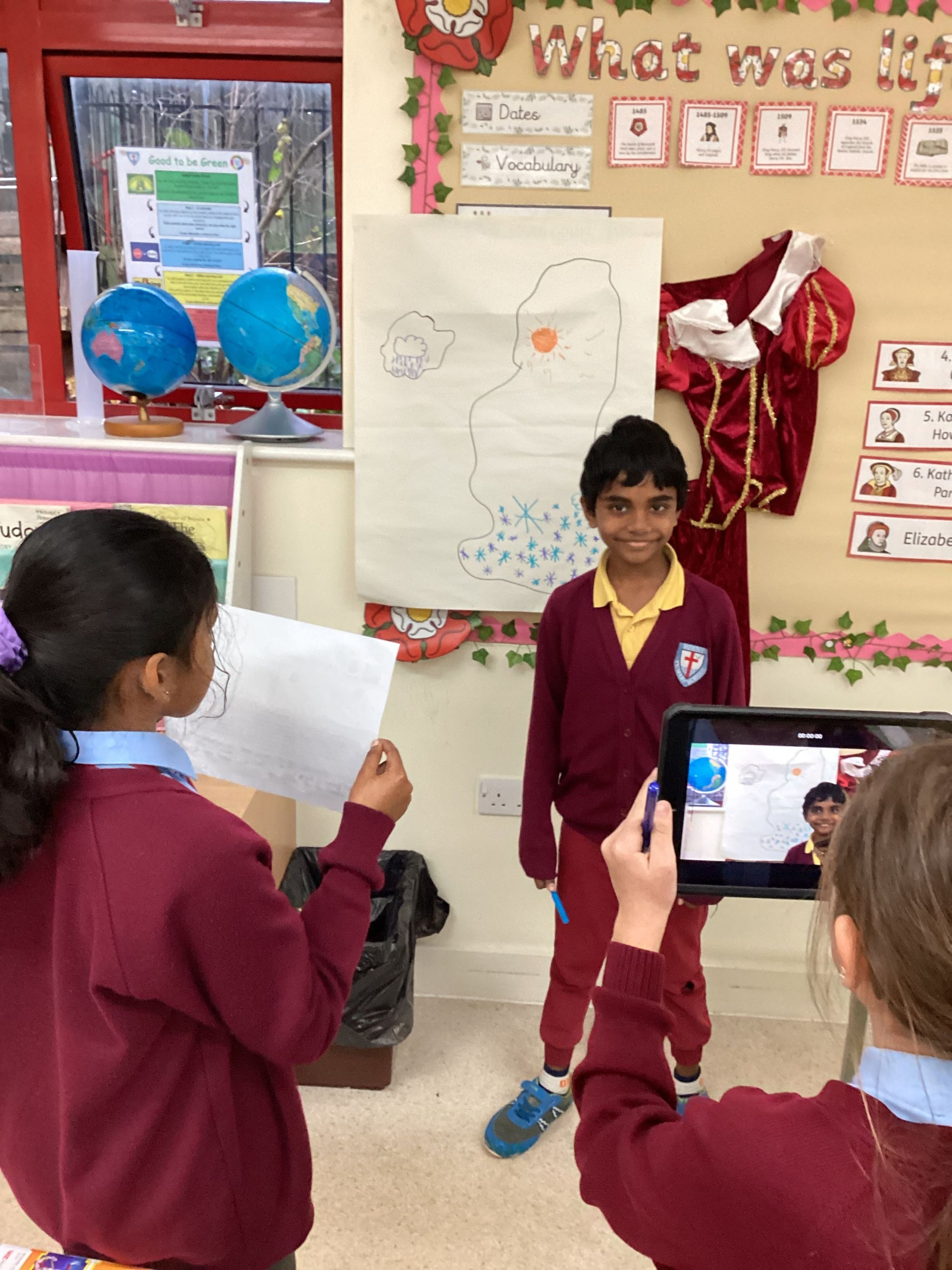
We have 60 Chrome books in school and 45 iPads which are kept within three charging units. 15 iPads are designated to Early Years while the further 30 can be shared within the school. Each classroom also has an iPad that they can use as a further resource as well as Smartboard. All this hardware means that all year groups have the opportunity to use a range of devices and software for many purposes across the wider curriculum, as well as in discrete computing lessons.
Our Early Years children will be given planned opportunities to engage with different areas of computing. They will have simple coding programmes such as Beebots and Caterpillars as well as learning how to take photos and videos on iPads.
In Key Stage 1 the children will be introduced to Chrome books and learn how to access them. They will be taught specific internet safety skills about personal information and how to keep safe on the internet at a basic level. They will also be taught how to search the internet and what to do if they see something that is upsetting. Children will continue their simple coding from Early Years, controlling Beebots with more accuracy and fixing simple bugs when they go wrong. They will progress on to coding in simple games on computers. Children will learn to use the keyboard and mouse to navigate different software and learn to save and retrieve their work using different programmes.
Lower Key Stage 2 will continue their computing curriculum using the Chromebooks. The children will be reminded how to keep safe on the internet and then move on to spotting false information on the internet. They will learn about how the internet works and how results are ranked on search engines. This will range from learning about phishing to spotting fake news and how to sort facts from fiction – linking to book ‘Question Everything! An investigator’s toolkit’. The children will continue to develop their coding knowledge and start to learn how to design, debug and test their own coding games. After learning about different software the children will learn how to use different software for different purposes and different audiences. Children will learn how to input from other areas such as images and hyperlinks with cross curricular links.
Children in Upper Key Stage 2 are being prepared for their journey into secondary school. We will refresh their knowledge on staying safe online and keeping personal information private, moving them on to social media and cyber bullying. Although our children are not old enough to use social media we understand that some parents have allowed their children to have social media accounts as well as messaging each other on APPs, so they need to know about being respectful online and the law about sending inexplicit content. Children will continue to use the Chrome books and learn how the internet works and how different people can add to the internet and that once something is uploaded, it becomes very hard to take back down again. To continue on their coding knowledge they will learn to design, debug and test their own coding games. These are to include different inputs and outputs with variable conclusions. Children will learn how to use a variety of software efficiently for different purposes and different audiences. They will learn to add their own voices to different programmes as well as uploading their own content onto computers/websites from other devices such as their own photos/videos from iPads.
Impact
Our computing curriculum ensures that children leave primary school as confident, creative, and responsible digital citizens. They develop essential skills in coding, problem-solving, and digital literacy, alongside an understanding of AI and online safety, preparing them to thrive in an ever-changing technological world.